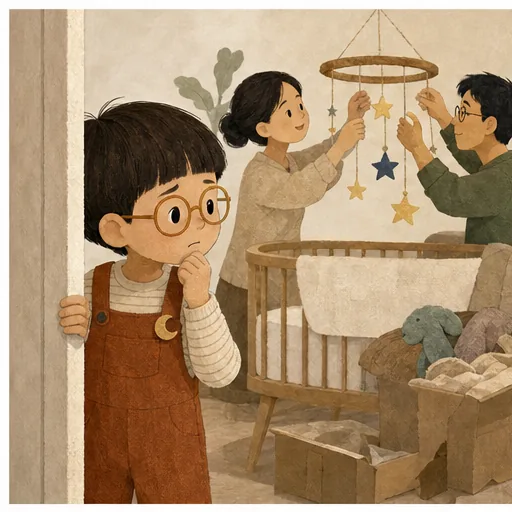
Gather reliable details
Choose details that protect the older child’s place: a routine that will continue, an object that remains theirs, and one small helper role they may accept or decline.
A new sibling book for a toddler is most useful when it protects the older child's place rather than selling the baby. Pick the routine that will continue, the object that stays theirs, and one small job they are allowed to refuse — then read the script below.
Sign in with Google · plan your child’s story freeYour child’s full story outline, planned free after Google sign-in — no card needed.
Name the routine you can genuinely keep. Skip any sentence you are not sure you can honor in the first month.
Printed from sprokle.com/situations/welcoming-a-sibling/. Swap in the details your child will really experience before you read it.
A personalized book works best when its details match what your child will actually experience. These pointers help you shape the story — and keep using it after the day arrives.
Choose details that protect the older child’s place: a routine that will continue, an object that remains theirs, and one small helper role they may accept or decline.
Use the story to name mixed feelings, noise, waiting, and the need for one-to-one time. Avoid making the child responsible for keeping the baby calm or the adults happy.
Return to pages about familiar rituals after the baby arrives. Update practical details while keeping the message clear: family life changed, and the older child still belongs at its center.
The complete example book below keeps the older child visibly at the center of the family while the baby arrives. Sprokle does not diagnose a child or replace professional advice.