Gather reliable details
Build the story around the bedtime routine your household can repeat: where the grown-up says goodnight, what light remains on, and what happens after a child calls out.
A social story about sleeping in your own bed only helps if the plan inside it is one your household repeats when everybody is tired. Decide where you say goodnight, which light stays on, and what happens when your child calls out — then read the script below.
Sign in with Google · plan your child’s story freeYour child’s full story outline, planned free after Google sign-in — no card needed.
Use your own rooms, lights and sounds. Repeat the same wording for several nights before changing anything.
Printed from sprokle.com/situations/sleeping-alone/. Swap in the details your child will really experience before you read it.
A personalized book works best when its details match what your child will actually experience. These pointers help you shape the story — and keep using it after the day arrives.
Build the story around the bedtime routine your household can repeat: where the grown-up says goodnight, what light remains on, and what happens after a child calls out.
Practice the short return-to-bed plan during the day. Let the child identify ordinary sounds and choose one comfort item, without claiming that fear must disappear before sleep.
Notice which step worked and keep that language stable for several nights. Adjust one part at a time so the story remains recognizable when everyone is tired.
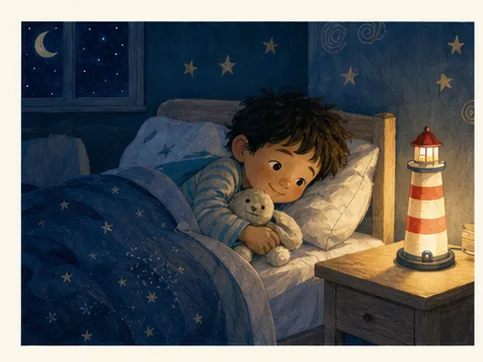
The story plan below is built around one steady light and a three-step night plan a parent can repeat after the story. It is a concept brief: a cover direction and a story outline that has not been illustrated or published yet, so the script above is the part you can read tonight. Sprokle does not diagnose a child or replace professional advice.