Gather reliable details
Collect a few concrete details from both homes: the last familiar breakfast, the travel plan, where a favorite object will be packed, and what can be unpacked first.
A social story about moving to a new house should carry both directions: what is coming with you and what is being left. Collect a few concrete details from each home, agree on a first-night ritual, and read the script below before moving day.
Sign in with Google · plan your child’s story freeYour child’s full story outline, planned free after Google sign-in — no card needed.
Name the real date and the real journey. Leave the sentence about missing the old home in, even if the move is a good one.
Printed from sprokle.com/situations/moving-house/. Swap in the details your child will really experience before you read it.
A personalized book works best when its details match what your child will actually experience. These pointers help you shape the story — and keep using it after the day arrives.
Collect a few concrete details from both homes: the last familiar breakfast, the travel plan, where a favorite object will be packed, and what can be unpacked first.
Invite the child to choose a first-room ritual, such as placing a nightlight or hanging one picture. Include things they may miss instead of presenting the move as only exciting.
Add one real discovery after arrival—a nearby tree, a hallway sound, or the route to school. The story can connect old and new memories without asking the child to choose between them.
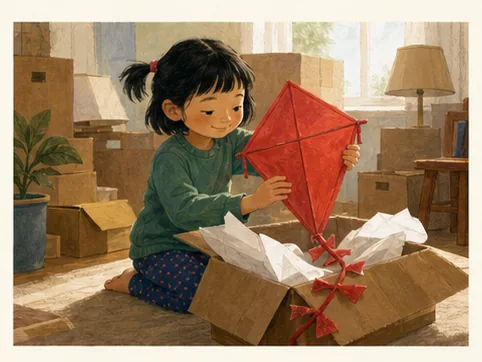
The story plan below uses one treasured object to connect the old home, the boxes in between, and the room that becomes theirs. It is a concept brief: a cover direction and a story outline that has not been illustrated or published yet, so the script above is the part you can read tonight. Sprokle does not diagnose a child or replace professional advice.