Gather reliable details
Ask the care team for the actual non-clinical sequence, including arrival, clothing, waiting, sounds, caregiver access, and what marks the end. Medical instructions should always come from the provider.
A hospital scan social story should describe the non-clinical sequence only: arriving, changing, waiting, the sounds, and what marks the end. Ask the care team for that order, ask where you are allowed to wait, and keep every medical instruction theirs — then read the script below.
Sign in with Google · plan your child’s story freeYour child’s full story outline, planned free after Google sign-in — no card needed.
Confirm each step with the care team before you say it out loud, including where you will be standing. Do not promise timings, sensations or results.
Printed from sprokle.com/situations/hospital-visit/. Swap in the details your child will really experience before you read it.
A personalized book works best when its details match what your child will actually experience. These pointers help you shape the story — and keep using it after the day arrives.
Ask the care team for the actual non-clinical sequence, including arrival, clothing, waiting, sounds, caregiver access, and what marks the end. Medical instructions should always come from the provider.
Use a toy to walk through visible steps and practice any simple job the team has confirmed, such as lying still. Do not use the story to guarantee timing, sensations, or results.
After the visit, let the child correct the story with what truly happened. Naming one surprise and one completed step can make the experience more understandable without minimizing it.
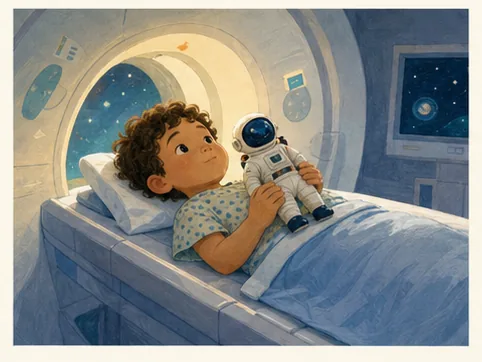
The story plan below rehearses the same ordinary steps with a toy astronaut going first, and leaves everything clinical to the care team. It is a concept brief: a cover direction and a story outline that has not been illustrated or published yet, so the script above is the part you can read tonight. Sprokle does not diagnose a child or replace professional advice.