Gather reliable details
Use direct, gentle language that fits what the family knows. Choose specific memories and one remembrance activity; avoid euphemisms that may make death or absence harder to understand.
A social story about a pet dying should use the direct words the family can stand behind, because euphemisms usually make death harder to understand, not gentler. Choose specific memories and one remembrance activity, then read the script below slowly and allow it to be interrupted.
Sign in with Google · plan your child’s story freeYour child’s full story outline, planned free after Google sign-in — no card needed.
Replace the name and use your own family's words. Stop whenever your child stops you; silence, questions and refusal are all normal. If your family needs support beyond a story, a qualified grief professional can help.
Printed from sprokle.com/situations/grief-and-remembrance/. Swap in the details your child will really experience before you read it.
A personalized book works best when its details match what your child will actually experience. These pointers help you shape the story — and keep using it after the day arrives.
Use direct, gentle language that fits what the family knows. Choose specific memories and one remembrance activity; avoid euphemisms that may make death or absence harder to understand.
Read slowly and allow stopping, questions, silence, or refusal. The story can show different family members feeling and remembering differently without assigning the child a correct emotional response.
Keep the book available without making it mandatory. New questions can appear over time, and a trusted adult or qualified grief professional can help when support beyond a family story is needed.
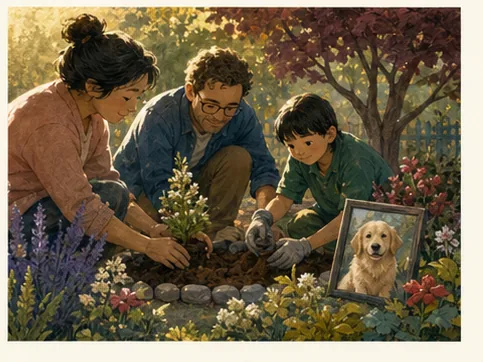
The story plan below remembers an old dog through specific ordinary moments and ends with one living memorial the family plants together. It is a concept brief: a cover direction and a story outline that has not been illustrated or published yet, so the script above is the part you can read tonight. Sprokle does not diagnose a child or replace professional advice.