Gather reliable details
Choose one situation the child recognizes and describe the earliest visible signs of rising intensity. Keep the language observational and avoid turning a feeling into a character flaw.
A big feelings social story for kids is easier to use when it describes one situation your child recognizes and the earliest visible signs of it, not a general lesson about being calm. Pick that situation, pick two actions that are genuinely available there, and read the script below at a quiet moment.
Sign in with Google · plan your child’s story freeYour child’s full story outline, planned free after Google sign-in — no card needed.
Read it on an ordinary afternoon, not during a hard moment. Keep the wording observational, and never turn a feeling into a character flaw.
Printed from sprokle.com/situations/emotion-regulation/. Swap in the details your child will really experience before you read it.
A personalized book works best when its details match what your child will actually experience. These pointers help you shape the story — and keep using it after the day arrives.
Choose one situation the child recognizes and describe the earliest visible signs of rising intensity. Keep the language observational and avoid turning a feeling into a character flaw.
Show two safe actions that are genuinely available in that setting, such as moving to a quieter space, pressing hands together, asking for help, or taking a pause.
Read the repair pages as carefully as the calm-down pages. The useful ending is not perfect control; it is noticing what happened, reconnecting, and trying a workable next step.
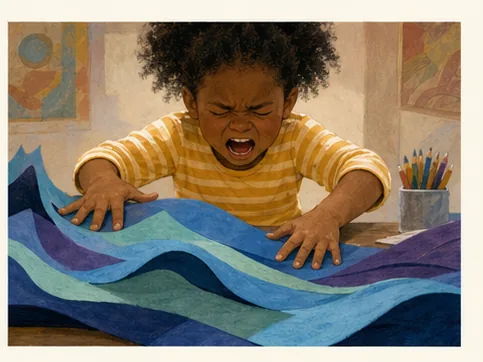
The story plan below gives a family shared, non-shaming language for intensity — a small ripple, a rising wave, a safe release, and repair. It is a concept brief: a cover direction and a story outline that has not been illustrated or published yet, so the script above is the part you can read tonight. Sprokle does not diagnose a child or replace professional advice.